

Looking back to our very first conversations with Khun Paek and Khun Lek (Naphaporn Bodiratnangkura), what excited us most was the opportunity to contribute to the design of a remarkable project on one of Bangkok’s most treasured sites.
Yet, once we stepped onto the land, our attention quickly shifted beyond the architectural brief. It was drawn instead to the mature garden and the magnificent trees that had been carefully nurtured and protected across generations.
It became immediately clear that the greatest asset of this project was not the building yet to be designed, but the living heritage that already existed. Our responsibility was not simply to create something new, but to ensure that this legacy would endure through the site’s next chapter of development.
The Somphong Tree
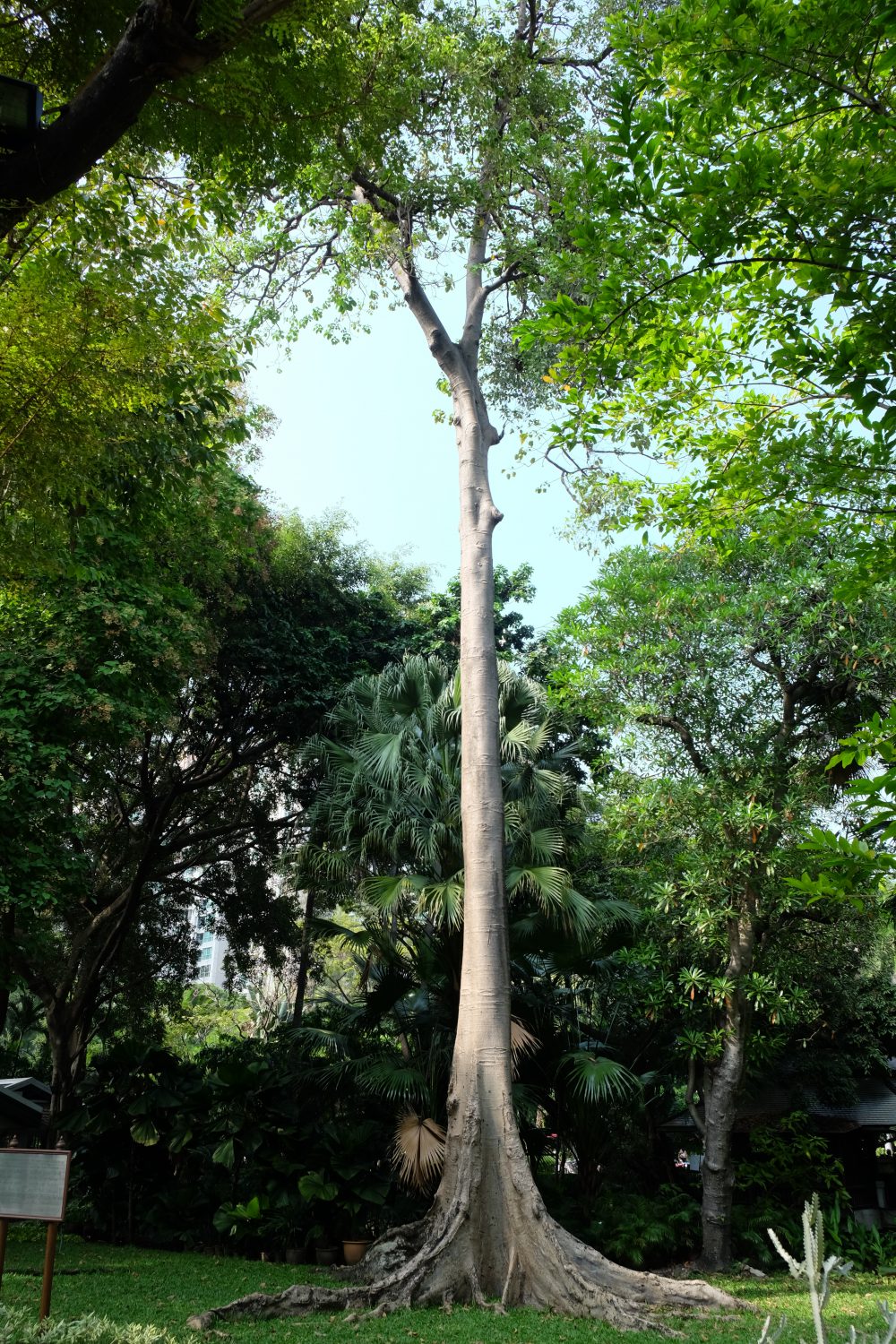
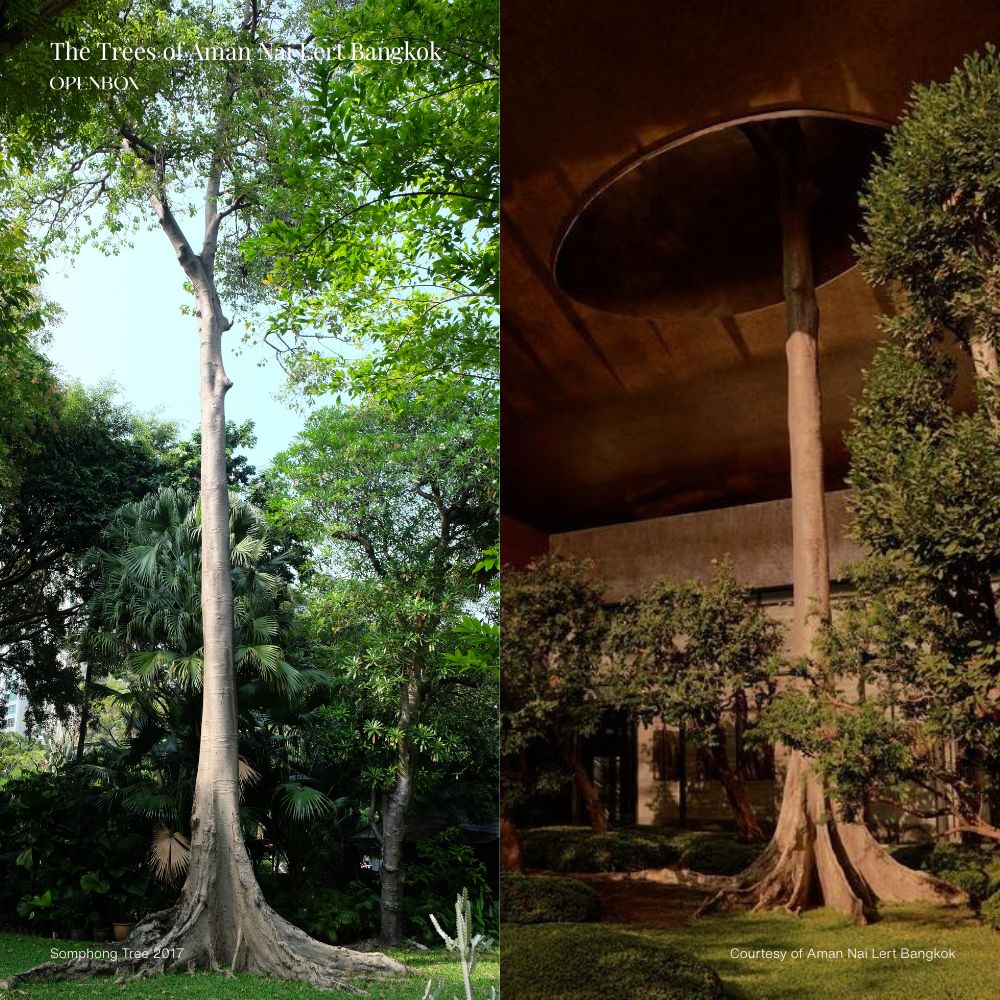
Standing nearly thirty metres tall, with its straight trunk and dramatic buttress roots rising proudly above the ground, the Somphong tree has stood here for more than a century. It was planted by the great-grandfather of the Nai Lert family, together with a simple wish:
No matter what the future might bring to this land, the tree should remain, standing with the same dignity for generations to come.
That single request became the starting point of the entire design process. From a technical perspective, preserving a mature tree of this scale is far more complex than simply leaving space around its trunk. It influences the site planning, structural system, foundation design, engineering coordination, construction methodology, and even the sequence of construction itself.
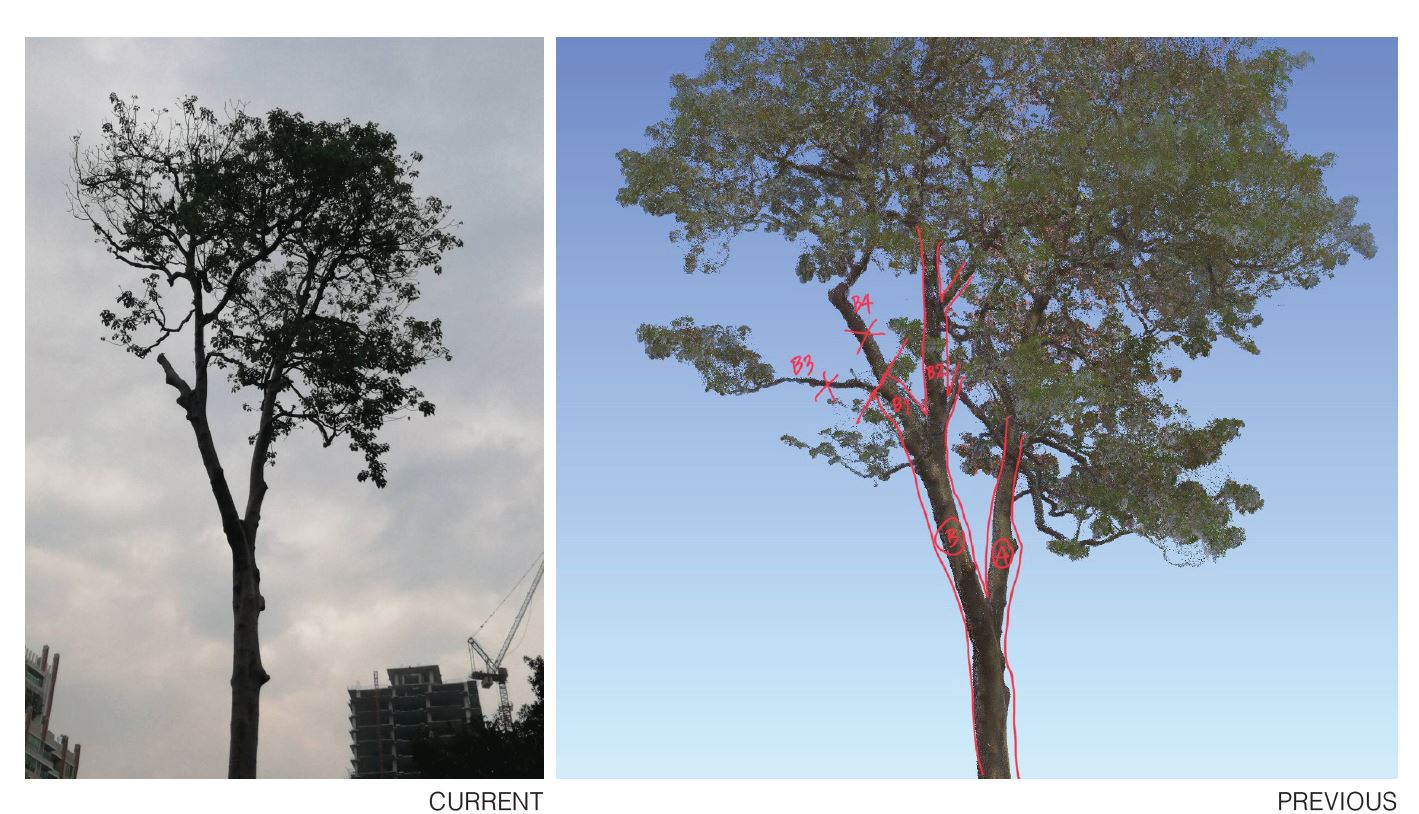
Initial pruning strategy developed to preserve the tree by identifying only the branches that might require removal. Ultimately, only one branch was pruned.
Every design decision was guided by the same question: Can this be done while allowing the tree to continue growing and thriving?
What first appeared to be a constraint ultimately became the defining idea of the project.
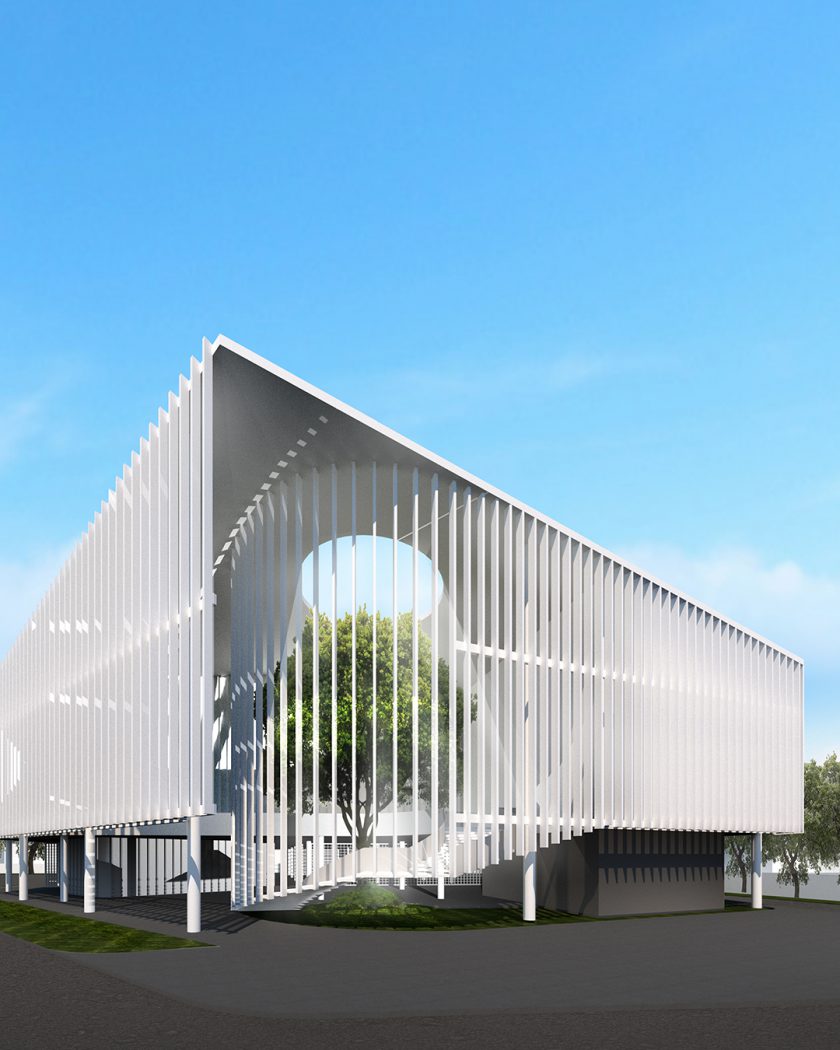
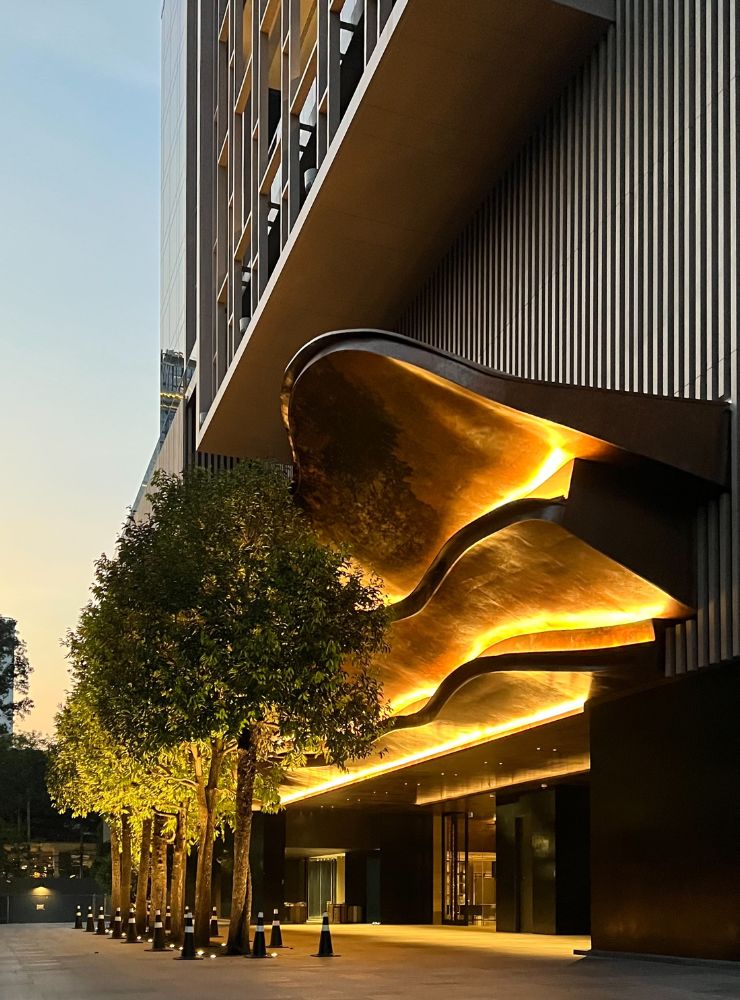
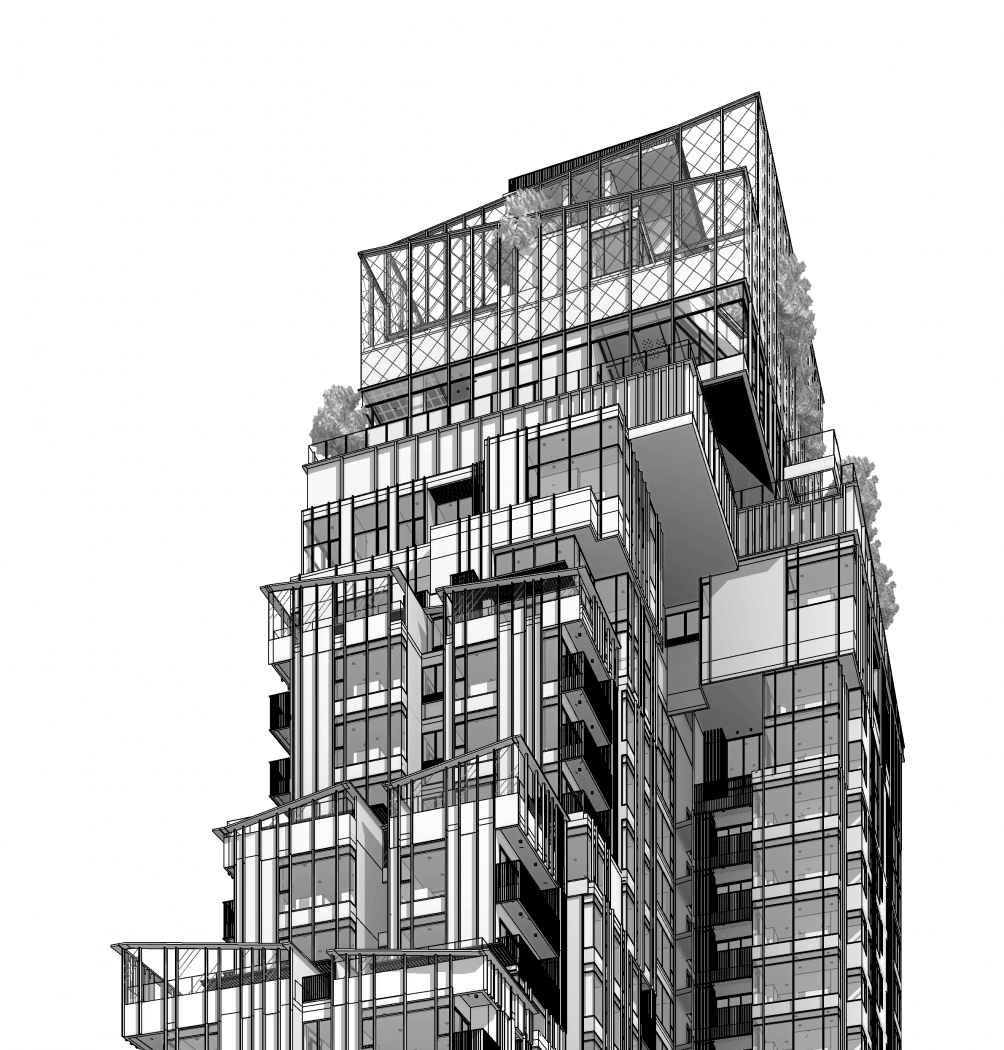
The central garden was conceived as a stage for the Somphong tree. A soaring canopy rises the equivalent of nine storeys above the landscape, while no structural columns or foundations interfere with its critical root system beneath the ground.
The tree therefore remains the true centre of the space. Around it, newly introduced planting has been carefully composed, transforming the garden into a living landscape where architecture and nature exist as one, rather than treating greenery as a decorative addition to a building. Every building is inevitably shaped by constraints—site conditions, budgets, and construction efficiency.
Yet sometimes, the greatest value of a place cannot be measured by any of these.
A century-old tree is more than a landscape element. It embodies family memories, the history of a place, and the lives of generations that grew alongside it long before this architecture came into being.
When design begins by protecting these values, architecture becomes more than a new structure placed upon an existing site.
It becomes a place that carries the past forward while allowing new stories to unfold.
For us, design does not always begin by creating something new.
Often, it begins by recognising the value of what is already there, and carefully shaping the future so that those values may continue to grow.
Great places are not defined solely by what we build. They are equally defined by what we choose to preserve.
If, one day, visitors walk through this garden and feel that the Somphong tree still stands with quiet dignity—so naturally that the entire building seems to have been designed around it—and if that tree continues to inspire curiosity, conversations, and stories passed from one generation to the next, then we believe the architecture has truly fulfilled its purpose.
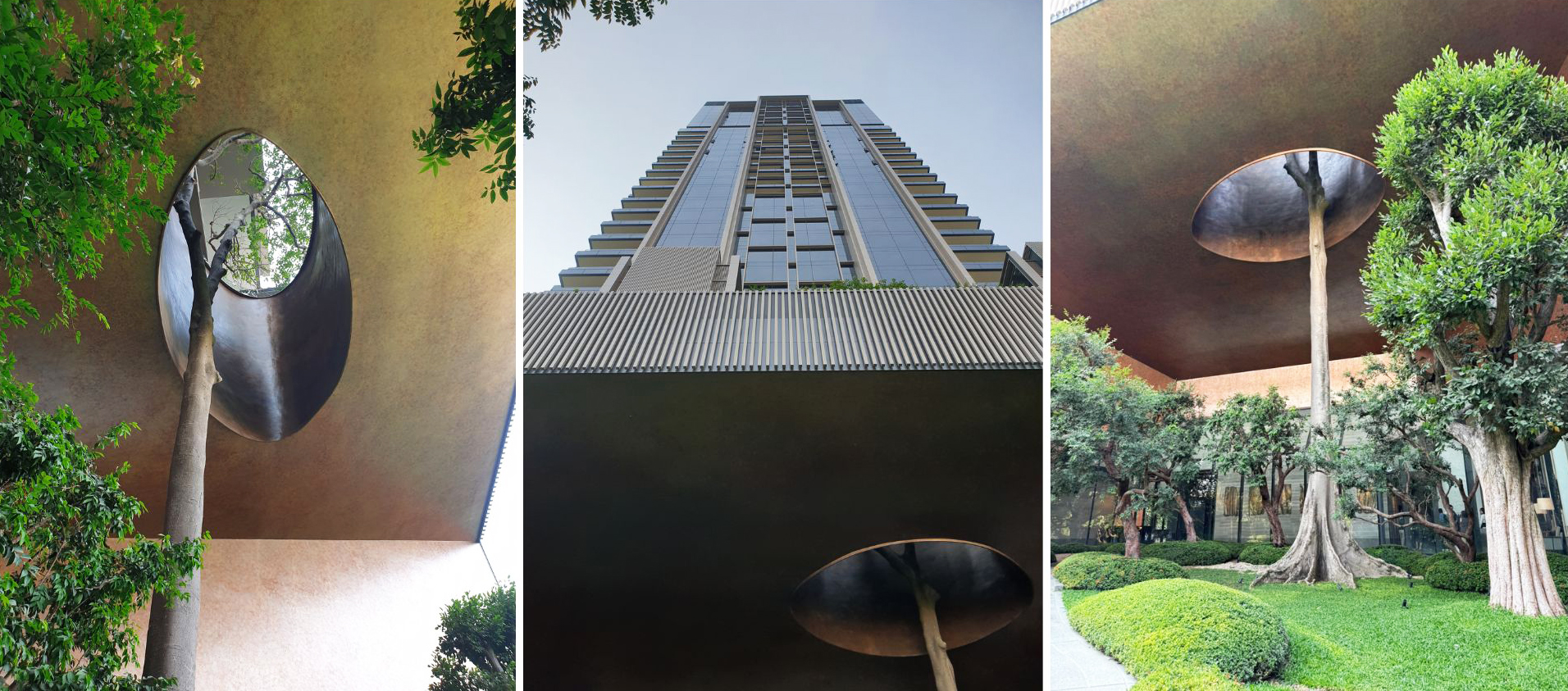
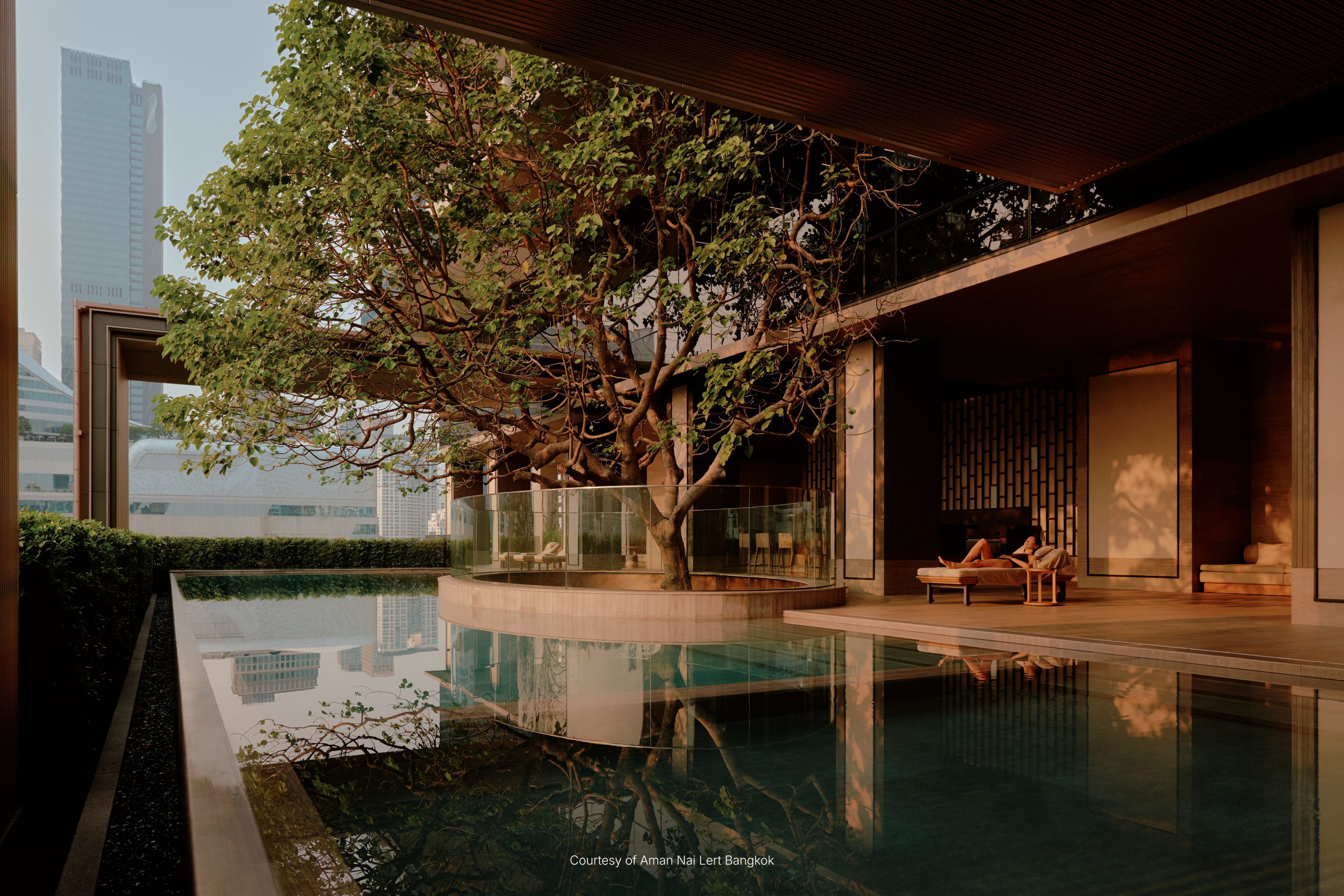
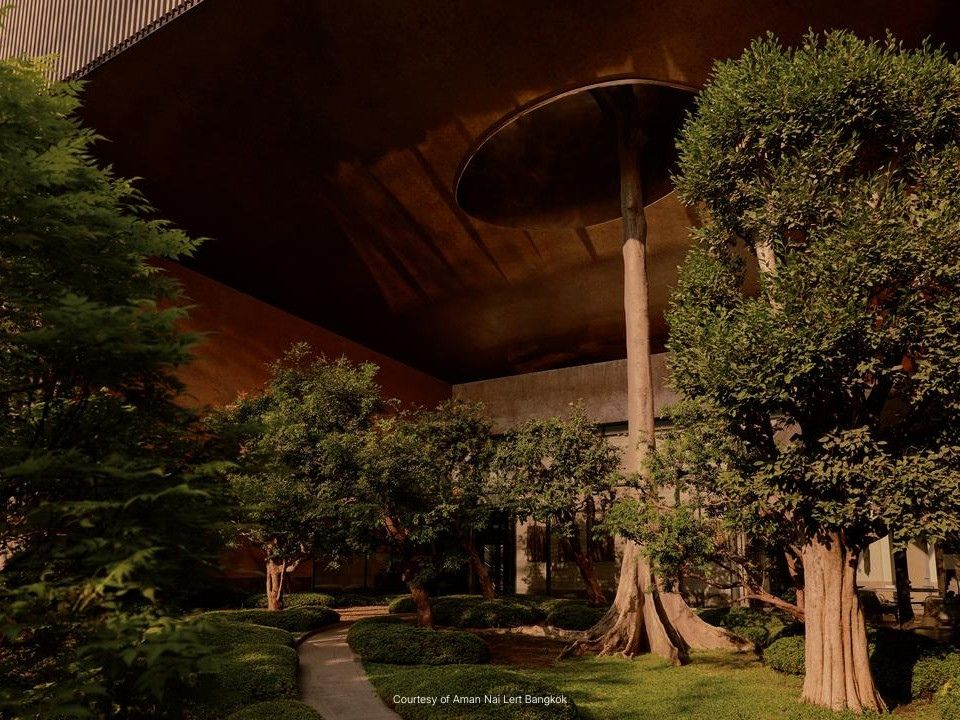
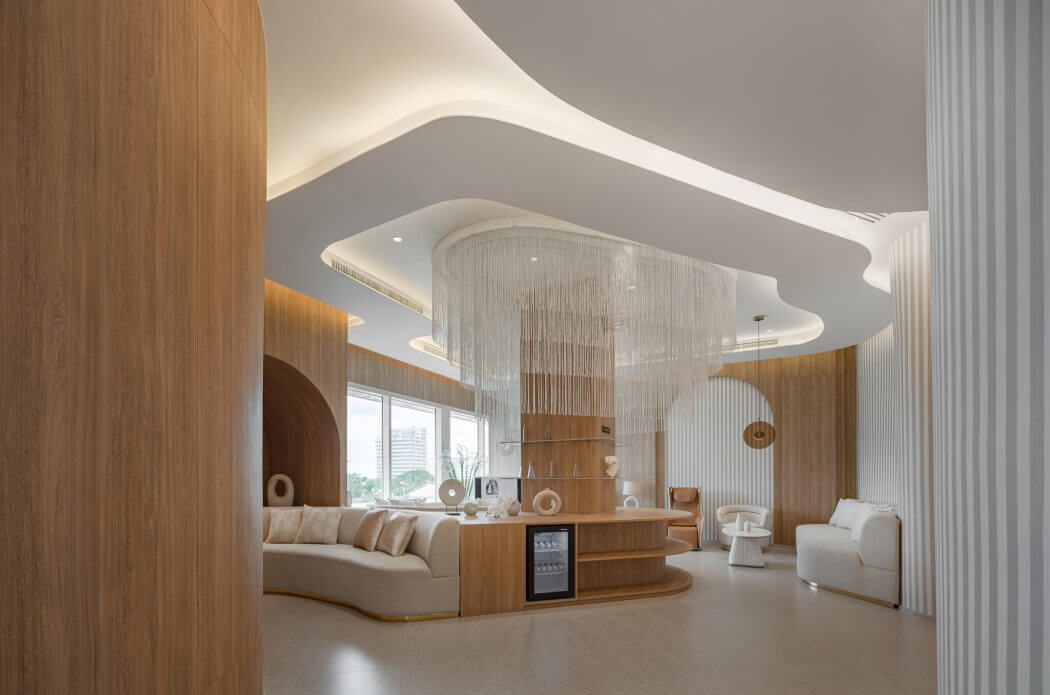
At the heart of the hotel, a 100-year-old Sompong tree anchors the courtyard, shaping the building’s flow and bringing nature within.